Welcome To Hue: The Imperial Soul of Vietnam
Nestled gracefully along the poetic banks of the Perfume River in Central Vietnam, Hue was the political, cultural, and spiritual capital of unified Vietnam under the 13 emperors of the Nguyen Dynasty (1802–1945). Inscribed in 1993 as Vietnam’s first-ever UNESCO World Cultural Heritage Site, Hue is an open-air museum where imposing citadel bastions, poetic lakeside mausoleums, ancient Buddhist shrines, and centuries of royal court traditions remain alive in everyday rhythms.
Imperial Splendor & World Heritage Landmarks
1. The Imperial City & Purple Forbidden City (Dai Noi)
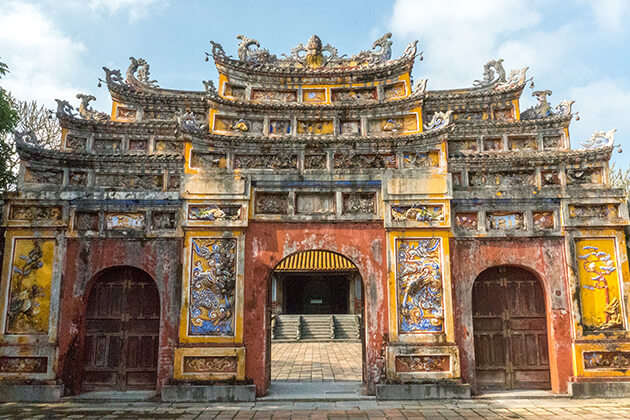
Protected by massive 10-kilometer brick ramparts and a wide lotus-filled moat, the Hue Citadel houses the Imperial City. Modeled after Beijing’s Forbidden City yet infused with Vietnamese geomantic principles, visitors enter through the majestic Ngo Mon (Meridian) Gate to explore the Hall of Supreme Harmony (Dien Thai Hoa), the ancestral The Mieu temple compound, and the restored gardens of the innermost Purple Forbidden City (Tu Cam Thanh), where the royal family lived.
2. The Monumental Royal Tombs of the Nguyen Emperors
Scattered among pine-covered hills south of the city, the imperial mausoleums reflect each sovereign’s unique philosophy and personality:
- Tomb of Emperor Tu Duc (Khiem Lang): Designed as an idyllic romantic garden sanctuary with quiet lakes, wooden pavilions, frangipani blossoms, and pine forests where the poetic monarch retreated during his lifetime.
- Tomb of Emperor Khai Dinh (Ung Lang): A striking fusion of Vietnamese baroque and European Gothic architecture perched dramatically on Chau Chu mountain, featuring intricate ceiling murals and luminous mosaics made from porcelain shards and stained glass.
- Tomb of Emperor Minh Mang: Renowned for strict Confucian symmetry and harmonious integration with natural water bodies and forested ridges.
3. Thien Mu Pagoda & The Perfume River (Song Huong)
Founded in 1601 on Ha Khe hill overlooking the river, Thien Mu Pagoda is Hue’s oldest and most iconic spiritual sanctuary. Its iconic octagonal, seven-story Phuoc Duyen Tower rises above serene temple gardens and ancient bronze bells. Drifting down the Perfume River by traditional dragon boat provides the classic, serene approach to the pagoda at twilight.
4. Nha Nhac: UNESCO Intangible Cultural Heritage
Recognized by UNESCO in 2003, Nha Nhac (Vietnamese Court Music) was performed at annual ceremonies, coronations, and ancestral rites. Utilizing traditional wind, string, and percussion ensembles alongside courtly dances, live performances today at the Duyet Thi Duong Royal Theater inside the Citadel offer a rare immersion into courtly ritual artistry.
Imperial & Street Gastronomy: The Flavors of Hue
Regarded as Vietnam’s ultimate culinary capital, Hue boasts more than a thousand distinct recipes divided between refined royal banquet cuisine and vibrant street snacks:
- Bun Bo Hue: The crown jewel of Central Vietnamese soups—thick round rice vermicelli steeped in a fiery, lemongrass-infused beef bone and shrimp paste broth, topped with tender beef shank, crab balls, and fresh banana blossoms.
- Royal Steamed Rice Cakes: Delicate appetizers served with sweet-savory fish sauce, including Banh Beo (dimpled rice cakes topped with dried shrimp), Banh Nam (steamed pork and shrimp wrapped in banana leaf), and Banh Bot Loc (chewy translucent tapioca dumplings with shrimp and pork belly).
- Com Hen (Clam Rice): A legendary street classic combining baby basket clams gathered from the Perfume River with cold rice, crispy pork cracklings, roasted peanuts, starfruit, and pungent shrimp paste.
- Che Hue (Sweet Dessert Soups): Hue is famed for its dozens of colorful sweet soups, ranging from lotus seed and mung bean to the intriguing Che Bot Loc Heo Quay (cassava dumplings stuffed with sweet caramelized roasted pork).
Where to Stay in Hue
- Riverside Heritage Luxury: Restored French Art Deco villas and five-star luxury resorts situated along Le Loi boulevard overlooking the Perfume River.
- City Center Boutique Hotels: Clustered around Chu Van An and Pham Ngu Lao walking streets, offering boutique comfort close to lively cafes, craft shops, and evening dining.
- Tranquil Garden Villa Resorts: Nestled in surrounding rural suburbs like Thuy Bieu pomelo village, perfect for travelers seeking eco-luxury, organic dining, and traditional herbal foot baths.
Transit & Central Heritage Corridor
Hue is a central anchor along Vietnam’s UNESCO World Heritage Route:
- Phu Bai International Airport (HUI): Located 15 kilometers south of town, providing regular daily flights connecting from Hanoi and Ho Chi Minh City.
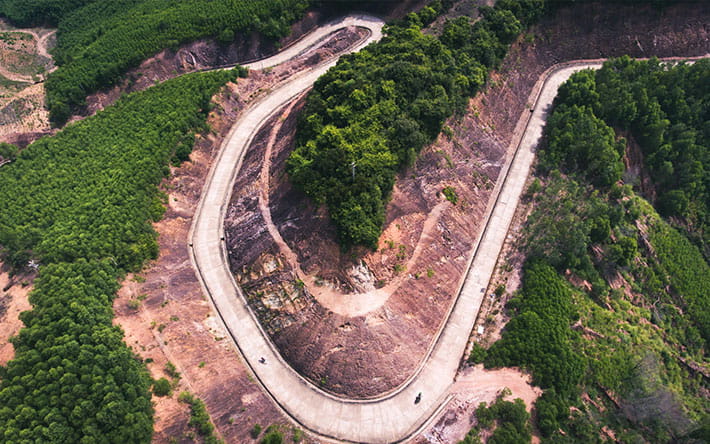
- The Heritage Train over Hai Van Pass: The scenic passenger train route connecting Hue with Da Nang takes approximately 3 hours, offering spellbinding ocean cliff vistas winding over the historic Hai Van Pass and Lang Co Bay.
- Connecting World Heritage Sites: Private cars and tourist buses travel smoothly southward to Hoi An Ancient Town (approx. 3 hours) and north toward the karst cavern kingdoms of Phong Nha – Ke Bang (approx. 4 hours).