Welcome To Ha Giang: Vietnam’s Final Karst Frontier
Anchored along Vietnam’s northernmost mountain border, Ha Giang is an awe-inspiring realm of vertical limestone towers, deep river canyons, and ancient ethnic civilizations. Inscribed in 2010 as Vietnam’s inaugural UNESCO Global Geopark, the Dong Van Karst Plateau preserves 400 to 600 million years of geological evolution, presenting travelers with Indochina’s most exhilarating high-altitude mountain expeditions.
UNESCO Geopark Wonders & Frontier Highlights
1. Dong Van Karst Plateau (UNESCO Global Geopark)
Covering four alpine districts—Quan Ba, Yen Minh, Dong Van, and Meo Vac—the Dong Van Karst Plateau is recognized worldwide for its dramatic karst geomorphology, marine fossils, and subterranean water networks. Driving through iconic passes like Bac Sum and Tham Ma reveals surreal fields of weathered black stone (thach son dao linh), where ethnic H’mong farmers cultivate corn in tiny rocky crevices.
2. Ma Pi Leng Pass & Tu San Canyon (Nho Que River)
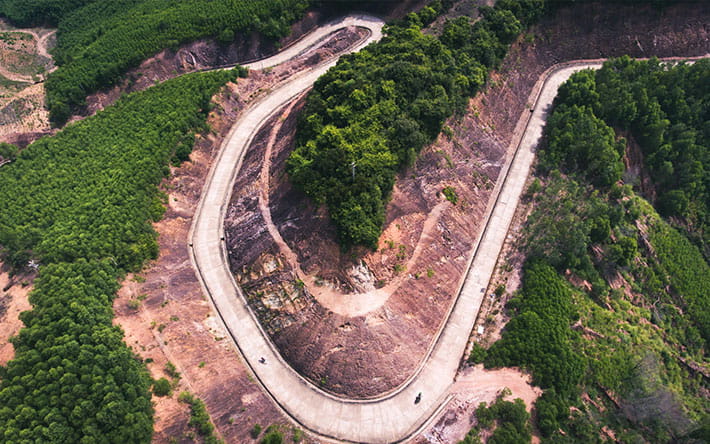
Hailed as the “King of Vietnam’s Mountain Passes,” Ma Pi Leng is a breathtaking 20-kilometer engineering marvel chiseled directly out of sheer limestone precipices at 1,500 meters altitude. Far below lies the Tu San Canyon—the deepest tectonic karst chasm in Southeast Asia, with vertical cliff walls rising up to 800 meters. Taking an electric boat or kayak across the jade-colored waters of the Nho Que River offers an unforgettable perspective beneath these towering cliffs.
3. The H’mong King’s Palace (Dinh Thu Vua Meo)
Hidden within the mist-veiled valley of Sa Phin, this century-old stone fortress belonged to the Vuong family, who governed the autonomous H’mong realm and controlled the regional opium trade in the late 19th and early 20th centuries. The estate features defensive stone ramparts, pine-timber pillars, Chinese Qing dynasty courtyards, and traditional H’mong clay-tiled roofs (ngoi am duong).
4. Lung Cu National Flag Tower & Lo Lo Chai Cultural Village
Perched atop Dragon Mountain (Nui Rong) at Vietnam’s northernmost geographic tip, the 54-meter-tall Lung Cu Flag Tower marks the sovereign frontier with its 54-square-meter national banner representing Vietnam’s 54 ethnic groups. At its base lies Lo Lo Chai Village, an enchanting hamlet of clay-rammed earthen houses (nha trinh tuong) where the Lo Lo ethnic minority maintain traditional festive garments, bronze drum rituals, and warm community homestays.
5. Hoang Su Phi Terraced Rice Fields
In western Ha Giang, the mountain slopes of Hoang Su Phi feature dizzying terraced rice paddies recognized as a National Cultural Monument. Carved by the Nung, La Chi, and Dao communities, these terraces transform into cascading staircases of gold every autumn during the harvest.
Highland Frontier Gastronomy
Ha Giang’s mountain cuisine is deeply comforting, designed to counter the crisp alpine chill:
- Thang Den: Hand-rolled glutinous rice dumplings stuffed with sweet mung bean or sesame, served steaming hot in sweet ginger syrup and garnished with roasted peanuts and coconut cream.
- Banh Tam Giac Mach (Buckwheat Cakes): Made from ground seeds of blooming buckwheat flowers, steamed in large woks and lightly grilled over glowing embers to produce a nutty, rustic flavor.
- Chao Au Tau: A rich, bittersweet medicinal porridge simmered overnight with pork trotters, glutinous rice, and the carefully detoxified roots of the mountain wolfsbane plant (au tau), garnished with soft eggs and fresh herbs.
- Thit Trau Gac Bep (Kitchen-Smoked Water Buffalo): Lean mountain buffalo meat marinated with wild mac khen forest pepper, lemongrass, and chili, cured over hardwood hearth smoke for weeks.
- Ruou Ngo Men La (Leaf-Fermented Corn Wine): A fragrant, smooth highland spirit distilled from sweet mountain corn fermented with dozens of wild botanical forest herbs.
Where to Stay in Ha Giang
- Historic Clay-Rammed Homestays (Lo Lo Chai & Nam Dam): Heritage rammed-earth houses featuring wood-burning fireplaces, private clean bathrooms, and genuine hospitality from indigenous families.
- Karst Valley Eco-Lodges (Dong Van & Meo Vac): Boutique stone lodges perched against dramatic cliff backdrops, offering warm down blankets, panoramic mountain decks, and local guided treks.
- Ha Giang City Gateway Hotels: Convenient transit hotels and boutique villas for resting before or after tackling the rugged loop route.
How to Travel the Ha Giang Loop
Exploring this extreme northern frontier requires thoughtful routing:
- From Hanoi to Ha Giang City: VIP cabin sleeper buses and luxury limousine coaches depart regularly from Hanoi, traveling via the Tuyen Quang expressway in roughly 5.5 to 6 hours.
- Tackling the Iconic “Ha Giang Loop”: From Ha Giang City, travelers embark on a 3 to 4-day circuit covering 350+ kilometers (Ha Giang City → Quan Ba → Yen Minh → Dong Van → Lung Cu → Meo Vac → Du Gia). This can be completed via private 4×4 car with driver, or via “Easy Rider” (riding pillion behind an experienced local mountain motorcycle guide).
- Connecting Highland Circuits: Travelers can connect Ha Giang smoothly westward toward Sa Pa via Bac Ha, or journey east toward Ban Gioc Waterfall in Cao Bang.